Toyota's Late EV Push Is Working: US Registrations Up 225%, Japan Sales Up 3,300%
Toyota's electric vehicle registrations jumped 225% in the United States in April 2026 and surged 3,300% in Japan in Q1, as three new EV models gain momentum — transforming the company from an EV laggard into one of the fastest-growing electric brands in both markets.
For years, Toyota was the outlier among major automakers — skeptical of the all-electric transition, bullish on hybrids, and consistently slower than rivals to field dedicated electric vehicles. In 2026, the data is beginning to tell a different story.
A Surge in the US Market
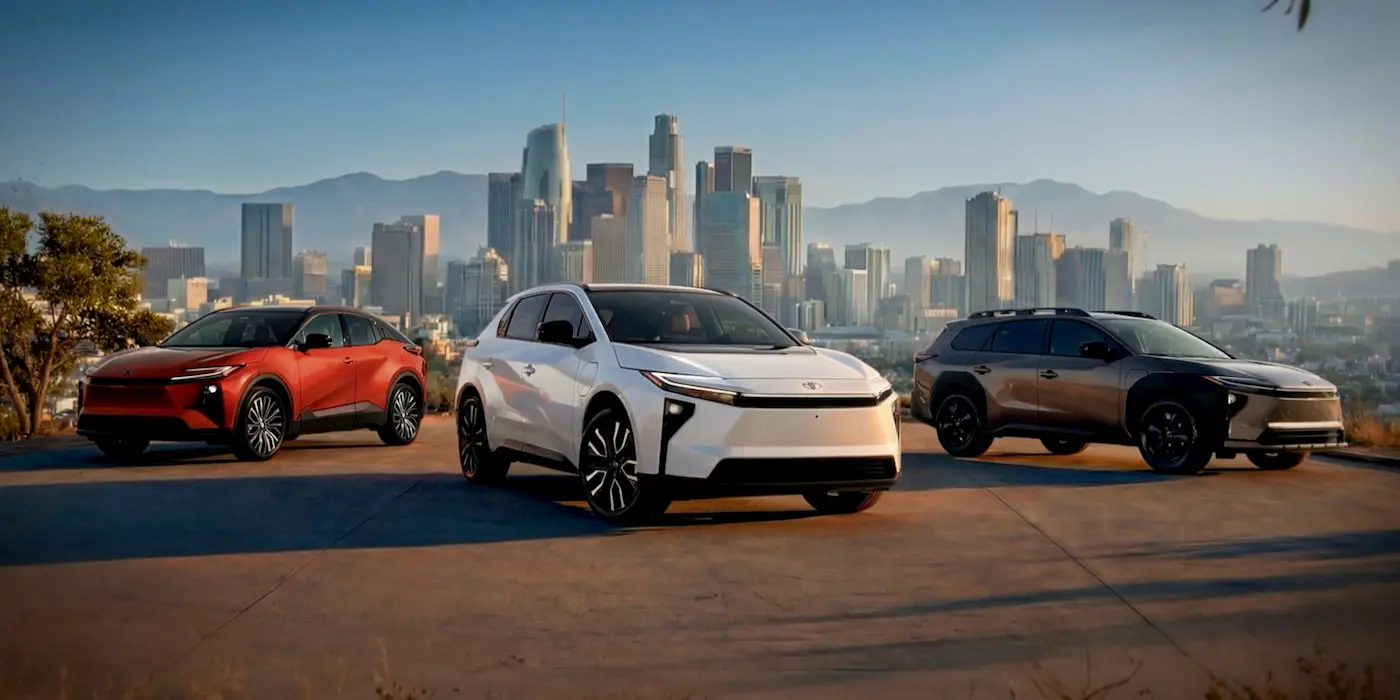
Toyota's fully electric vehicle registrations in the United States rose 225% in April 2026 compared with April 2025, reaching 3,524 units in a single month. That compares with approximately 1,000 registrations in April of the prior year. The jump is primarily driven by three new EV models now available in the US: the bZ, the C-HR Electric, and the bZ Woodland — a larger variant aimed at outdoor enthusiasts that launched in early 2026.
The growth rate has made Toyota one of the fastest-growing EV brands in the US by percentage, though in absolute terms it still trails market leaders. More strikingly, April's numbers show Toyota outselling multiple established EV brands in the US in that month, including BMW, Kia, Honda, Nissan, Lucid, Mercedes-Benz, Volkswagen, and Volvo.
Japan: A Near-Total Transformation
The numbers are even more dramatic in Japan. Toyota sold over 7,000 fully electric vehicles in Q1 2026, versus 212 units in Q1 2025 — a 3,300% year-over-year increase. The Japanese EV market has historically been resistant to adoption, with domestic buyers long preferring hybrids, which Toyota pioneered with the Prius. The dramatic reversal in Q1 reflects both the launch of dedicated EV models and a shift in Japanese government policy, which raised its zero-emission vehicle target earlier in 2026 to 50% of new car sales by 2030.
Why the Late Pivot Is Working
Toyota's delayed entry into full EVs has some strategic advantages it didn't have in 2021 or 2022. Battery costs have fallen significantly, reducing the per-unit loss on affordable EVs. Toyota's manufacturing expertise — refined through decades of production of the Prius and Camry Hybrid — has translated into unusually high build quality for its first generation of EVs, a factor reviewers have highlighted. And the company's global dealer network, which competitors like BYD lack in many markets, provides distribution advantages that pure EV startups cannot easily replicate.
The Road Ahead
Toyota's global EV sales remain well below those of BYD, Tesla, and even some European manufacturers by volume. The company has set a target of selling 1.5 million battery-electric vehicles annually by 2026 globally — a target it is now tracking toward after years of undershoot. With gas prices elevated across major markets and consumer interest in EVs increasing, the company's approach of entering late with well-engineered products and global scale may prove more durable than the earlier market share leaders who bet on aggressive early growth at high cost.